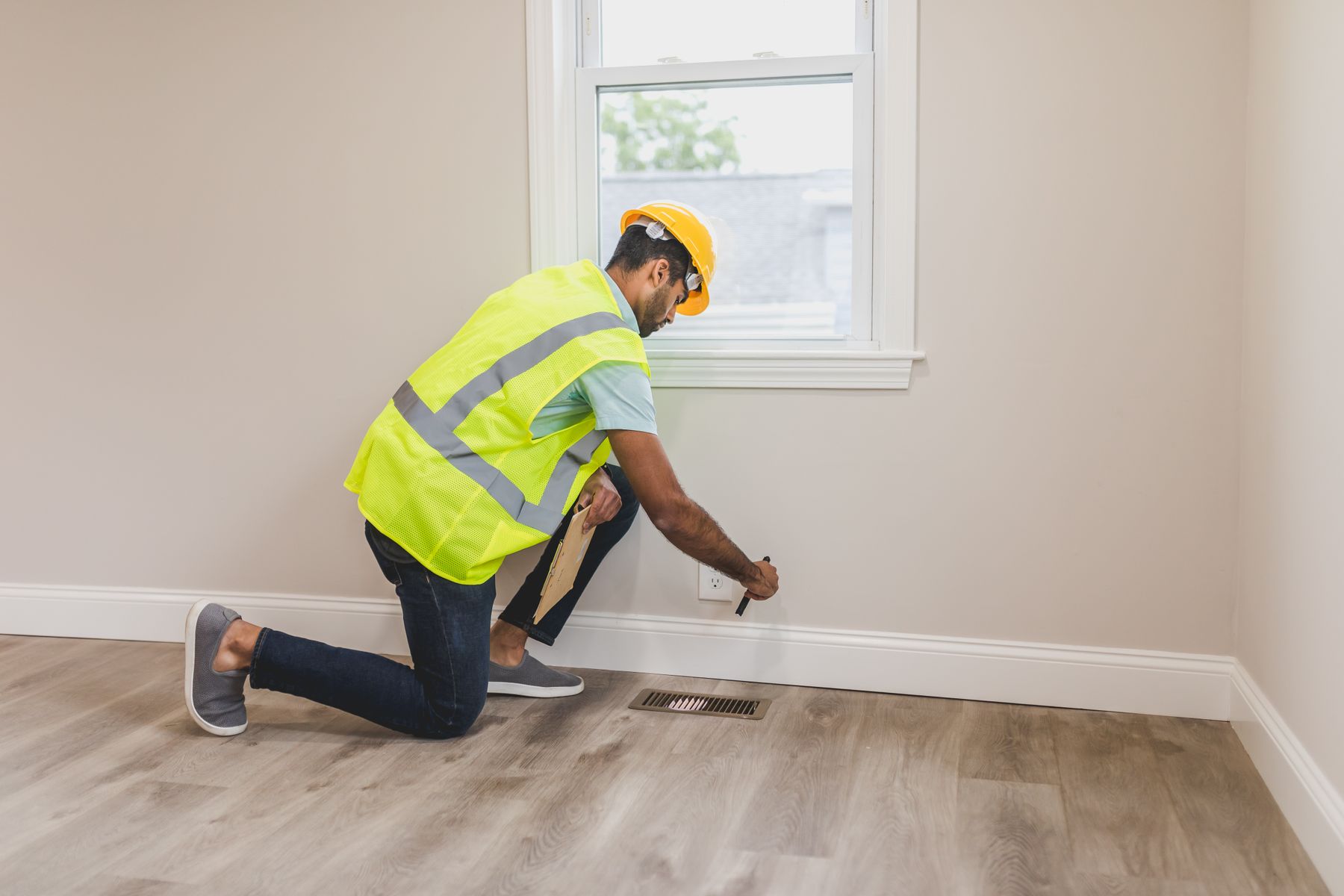
Water damage restoration is the process of stopping a leak, extracting standing water, drying the structure to verified moisture levels and repairing damaged materials. In Littleton, CO, help is available 24/7 in all 13 Littleton ZIP codes. Most homes need about three to five days of drying before repairs, and sudden losses such as burst pipes are typically covered by homeowners insurance.
Water damage is rarely as simple as the puddle you can see. In a typical Littleton home, water from a failed supply line or a split pipe runs under baseboards, soaks into the bottom of the drywall, wicks into carpet pad and, in a two-story home, drops through the floor framing into the ceiling below. Within a day it can be in places you can’t see from the room where it started, and that hidden moisture causes the swelling, odor and mold that show up later.
Professional water damage restoration is about finding and removing all of that water, not just the visible part. When you call, you’re connected with a local restoration team that can be dispatched day or night to stop the source, extract standing water, map moisture through walls and floors, set up commercial drying equipment, and document everything for your insurance claim.
Colorado’s dry air helps drying, but it doesn’t remove water trapped inside wall cavities, under hardwood or in basement slabs. That still takes measured, monitored drying, and it’s why a box fan and an open window so often leave damage behind.
Water Damage Restoration at a glance
- Availability
- 24/7, including nights, weekends & holidays
- Service area
- Littleton, CO: 80120, 80121, 80122, 80123, 80125, 80126, 80127, 80128, 80129, 80130, 80160, 80165, 80166
- Typical drying time
- About 3–5 days for most homes
- Industry standard
- IICRC S500 water damage restoration standard
- Common causes
- Frozen pipes, supply lines, water heaters, hail-damaged roofs, sump failures
- Insurance
- Sudden, accidental losses are typically covered; flood and gradual leaks often are not
Common Sources of Water Damage in Littleton Homes
Most calls trace back to a handful of failures, and several are made worse by Front Range weather.
Frozen & Split Pipes
Arctic cold snaps freeze pipes in exterior walls, garages and crawlspaces. The leak usually starts when the ice thaws, often hours after the freeze.
Supply Line Failures
Washing machine hoses, toilet and faucet supply lines, and refrigerator ice-maker lines burst without warning and can release hundreds of gallons.
Water Heater Leaks
Tank water heaters in basements and utility closets corrode with age and Colorado’s hard water, then leak slowly or fail all at once.
Hail & Roof Leaks
Hail-damaged shingles, flashing and skylights let rain and snowmelt into attics, ceilings and exterior walls.
Sump Pump & Window Well Flooding
Spring snowmelt and summer cloudbursts overwhelm sump pumps and fill window wells until water pours into finished basements.
Appliance & Fixture Leaks
Dishwashers, shower pans, tub drains and toilet wax rings leak slowly into subfloors and the ceiling below.
Signs Water Is Still Hiding in Your Home
- Baseboards that are swollen, soft or separating from the wall
- Paint that bubbles, peels or shows a tide-line stain
- Carpet that feels cool or damp along one wall
- A musty smell that comes back after cleaning
- Hardwood that cups, crowns or gaps at the seams
- Ceiling stains, sagging drywall or drips from light fixtures
- A higher-than-normal water bill with no obvious leak
- Laminate or vinyl plank that lifts or feels spongy
If you notice two or more of these, there’s very likely active moisture inside the structure. A moisture inspection with meters and thermal imaging can confirm where it is before you open walls or replace flooring.
Water Actively Leaking Right Now?
Shut off the main water valve (often in the basement on the wall facing the street, or in a utility room), switch off power to wet rooms at the breaker if you can do it safely, and call. Then:
- Move rugs, electronics and furniture off wet floors
- Photograph the damage before anything is moved
- Don’t use a household vacuum on standing water
- Stay out of rooms with sagging ceilings
How Does Water Damage Restoration Work?
Water Damage Restoration in Littleton follows four steps:
Stop the Source & Inspect
The leak is stopped, the water category is identified (clean, gray or black), and moisture is mapped with meters and thermal imaging to find the edges of the wet area.
Extract Standing Water
Truck-mounted and portable extractors pull water out of carpet, pad and hard floors. Removing water as liquid is far faster than evaporating it.
Dry & Dehumidify
Air movers and dehumidifiers are placed to suit the room, and readings are logged each visit until materials return to their normal dry levels.
Repair & Restore
Wet drywall, insulation, pad and trim that can’t be saved are replaced, then walls are textured and painted and flooring is reinstalled.
What Does Water Damage Restoration Include?
- Emergency water extraction
- Moisture mapping & thermal imaging
- Carpet & pad drying or removal
- Controlled removal of wet drywall
- Hardwood & subfloor drying
- Antimicrobial treatment
- Contents moving & protection
- Daily moisture monitoring logs
- Drywall, paint & trim repair
- Insurance photo documentation
The aim of a restoration job is to dry and save what can be saved, then replace only what can’t. Cutting a flood line two feet up a wall, for example, is often enough to dry a wall cavity in place instead of tearing out the whole wall. Ask the restoration team how they plan to dry each area and what moisture targets they’re working toward.
Water Damage in Littleton’s Mix of Older and Newer Homes
Littleton’s housing ranges from early-1900s bungalows near Main Street to 1960s and ’70s ranch homes around Southglenn and Columbine to 1980s–2000s two-story homes in Highlands Ranch and Ken Caryl. Each era has its own weak points: galvanized steel and cast-iron drains in the oldest homes, aging copper and original water heaters in mid-century homes, and polybutylene supply lines in some homes built between the late 1970s and mid-1990s.
Many homes here also have finished basements. Drywall, carpet and framing below grade dry slowly and are prone to mold, so a basement water loss deserves a professional moisture check even when the water seems to be gone.
Water Damage Restoration by Littleton Area & ZIP Code
Water Damage Restoration is available in every Littleton ZIP code. Here’s what to know in each part of the service area:
| Area | ZIP codes | What to know locally |
|---|---|---|
| Downtown Littleton | 80120, 80160, 80165, 80166 | Older homes near Main Street often mix original plaster, old-growth hardwood and decades-later basement finishes, so drying plans focus on saving historic materials before anything is removed. |
| Centennial & Southglenn | 80121, 80122 | Mid-century ranches and split-levels around Southglenn often have remodeled finishes over original subfloors, so water is traced through both old and new layers. |
| Bow Mar & Columbine Valley | 80123 | Larger custom homes in Bow Mar and Columbine Valley often have premium finishes, so drying plans prioritize saving hardwood, stone and cabinetry. |
| Roxborough & Sterling Ranch | 80125 | Distance from central Littleton makes fast dispatch and a clear arrival estimate especially important for foothill homes in 80125. |
| Ken Caryl & Dakota Ridge | 80127 | Tri-level and two-story Ken Caryl homes let water travel down through several floors, so every affected level is mapped for moisture. |
| Columbine & Chatfield | 80128 | Two-story and bi-level Columbine homes with long-finished basements are the most common water damage settings in 80128. |
| Highlands Ranch | 80126, 80129, 80130 | Two-story homes with finished basements, built from the 1980s onward, are the typical Highlands Ranch water damage setting. |