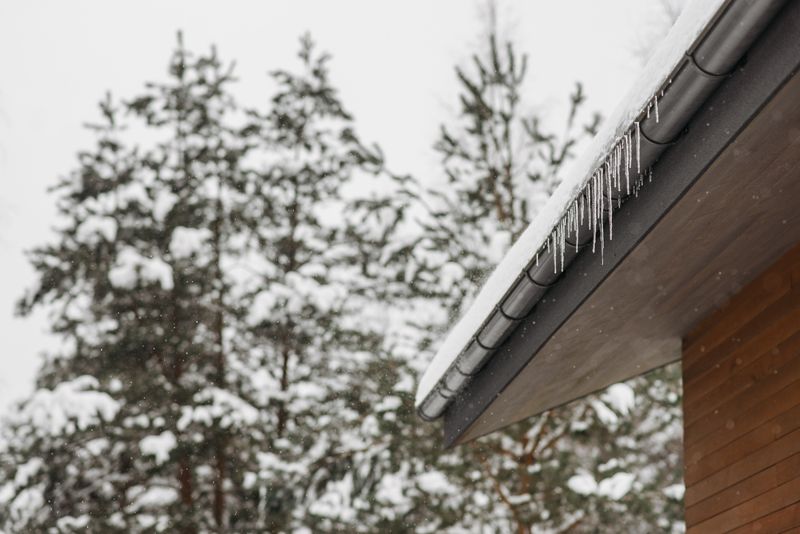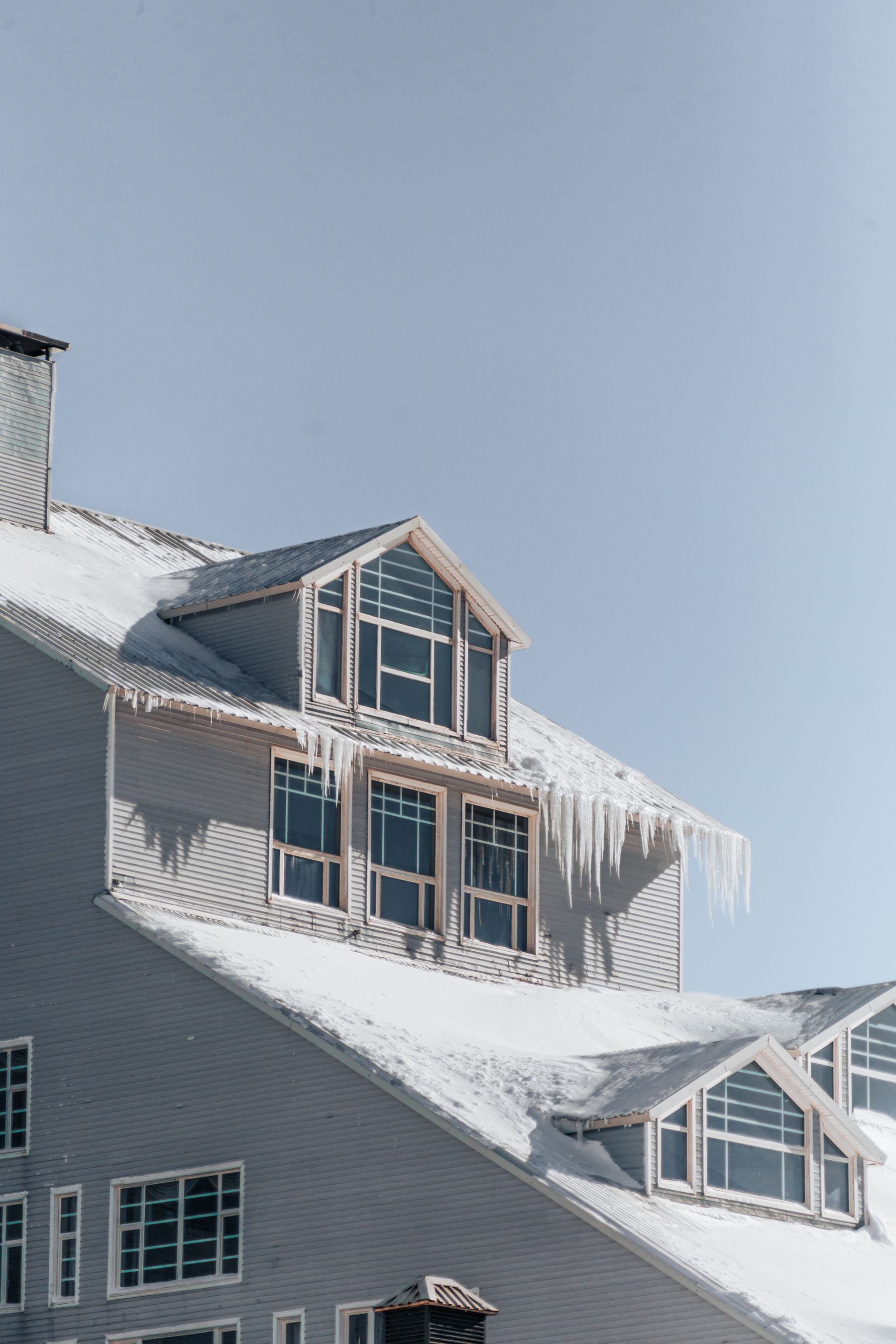
Littleton’s snow often arrives in big, wet storms followed by bright sunshine. That combination is perfect for ice dams: ridges of ice along the roof edge that push meltwater under shingles and into ceilings and walls.
- Ice dams form when heat melts roof snow that refreezes at the cold eaves.
- Heavy, wet March and April snow makes spring a peak ice dam season in Littleton.
- Air sealing, insulation and attic ventilation are the long-term fix.
- Use a roof rake from the ground; never chip ice or climb an icy roof.
How ice dams form
Heat escaping from the living space warms the roof deck and melts snow on the upper part of the roof. The meltwater runs down to the eaves, which hang out past the warm walls and stay cold, and refreezes there. As the cycle repeats, an ice ridge builds. Water melting behind the ridge has nowhere to go, so it backs up under shingles and leaks into the attic, exterior walls and ceilings.
When they happen in Littleton
March and April are often among the snowiest months along the Front Range, and spring snow tends to be heavy and wet. Bright sun on the following days melts the upper roof while nights stay below freezing, which is ideal ice dam weather. Big winter storms followed by cold, sunny stretches can cause them too.
Signs of an ice dam leak
- Thick ice along gutters and eaves, with large icicles
- Water stains or damp spots on ceilings near exterior walls
- Peeling paint or damp drywall around upstairs windows
- Wet or frosty insulation in the attic near the eaves
- Water dripping from soffits or running down inside exterior walls
What to do right now
- Catch interior leaks with buckets and towels, and move belongings away.
- Use a roof rake from the ground to pull snow off the lower few feet of the roof. Never climb onto an icy roof.
- Don’t chip at ice with hammers or picks, which damages shingles.
- Professionals can steam ice dams off without damaging the roof.
- Photograph interior damage and the ice dam for your insurer.
Long-term prevention
The real fix is keeping the roof deck cold so snow doesn’t melt unevenly:
- Air seal the attic floor. Gaps around light fixtures, bath fans, plumbing stacks and attic hatches let warm air into the attic.
- Add insulation. Adequate attic insulation keeps heat in the living space.
- Improve ventilation. Soffit and ridge vents keep the attic close to outdoor temperature.
- Vent exhaust fans outdoors. Bathroom and kitchen fans that dump warm, moist air into the attic make ice dams and attic mold worse.
- Add an ice and water shield. When re-roofing, a membrane along the eaves helps stop water that backs up under shingles.
Heat cables can help in trouble spots, but they don’t fix the underlying cause.
After the leak
Ice dam leaks often soak attic insulation and the top of the drywall before they show inside. Wet insulation loses its effectiveness and can hold moisture against framing, so it should be dried or replaced, and ceiling cavities should be checked before repairs. See ceiling water damage repair.
Related service: Ceiling Water Damage Repair in Littleton, CO.
Sources & industry standards
This guide is general information for Littleton-area homeowners, written with reference to the sources above. It isn’t professional, legal or insurance advice. See our editorial standards.