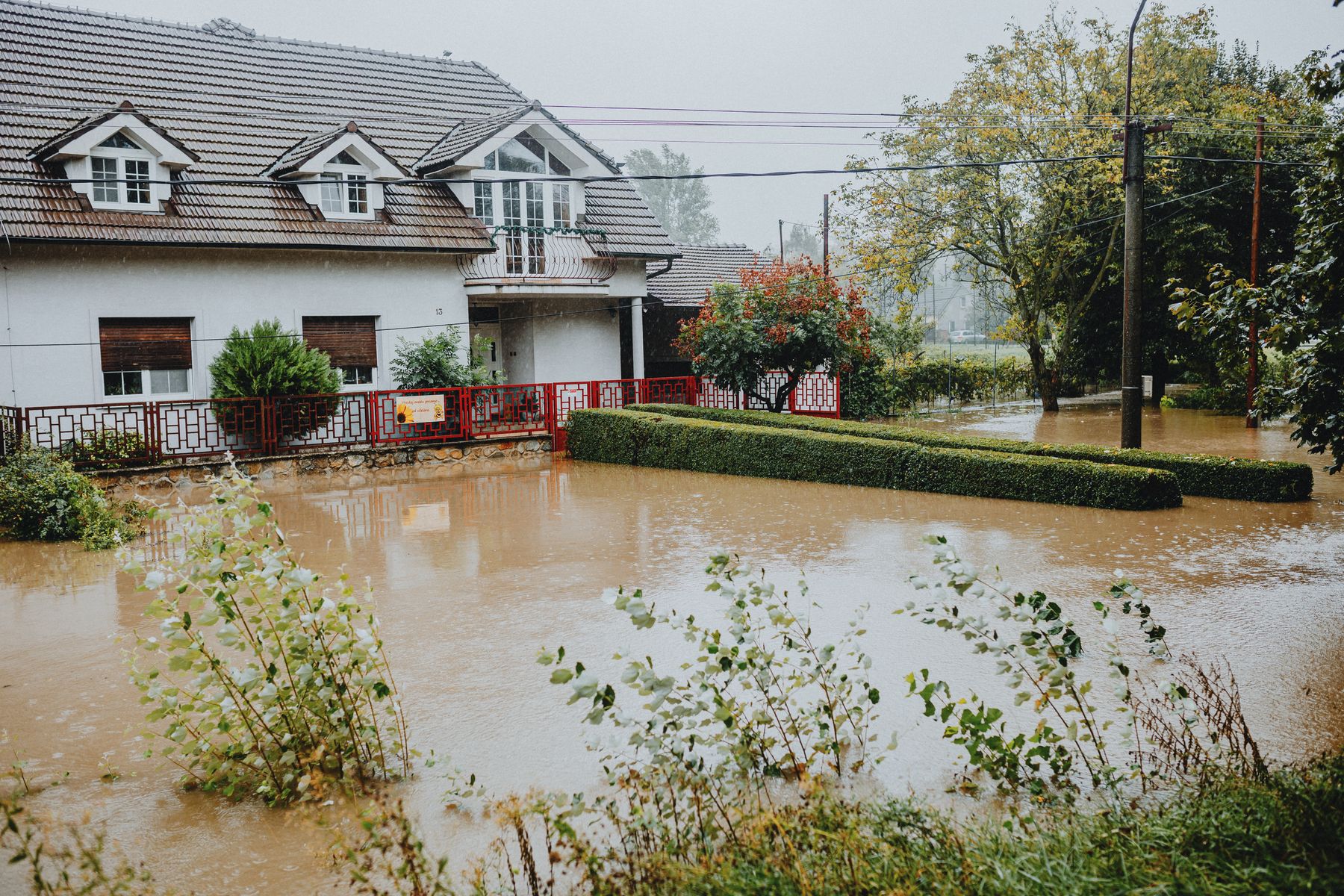
Flood damage cleanup in Littleton covers water that enters from outside, such as flash flooding, creek overflow, storm runoff and window well flooding. Floodwater is Category 3 (contaminated) water, so porous materials it touches are usually removed before the structure is sanitized, dried and rebuilt. Standard homeowners policies usually exclude flood; NFIP flood insurance covers it.
Floodwater isn’t the same as water from a broken pipe. Once rain or runoff crosses soil, streets and yards on its way into a building, it’s considered Category 3, or “black” water, under industry standards. It can carry sewage, fertilizers, fuel and bacteria, and it leaves silt and mud behind. Anything porous it touches, like carpet, pad, insulation and the lower part of drywall, usually has to be removed, not just dried.
Littleton sits along the South Platte River, with creeks and gulches feeding it from both sides. Most of the time they are quiet greenbelt trails. During intense summer thunderstorms they can rise quickly, and storm drains can back up into low-lying streets and walk-out basements.
Flood damage repair covers the whole recovery: pumping out water, removing mud and debris, tearing out contaminated materials, cleaning and sanitizing, drying the structure, and rebuilding what was lost.
Flood Damage Repair at a glance
- Availability
- 24/7, including nights, weekends & holidays
- Service area
- Littleton, CO: 80120, 80121, 80122, 80123, 80125, 80126, 80127, 80128, 80129, 80130, 80160, 80165, 80166
- Water category
- Category 3 (contaminated)
- Usually removed
- Carpet, pad, insulation and drywall below the flood line
- Insurance
- Typically requires separate flood coverage (NFIP)
- Local flood sources
- Summer cloudbursts, creek and gulch overflow, snowmelt, storm sewer backup
How Flooding Happens in the Littleton Area
Flooding here is usually sudden and local: a few hours of extreme rain rather than a slow-rising river.
Flash Flooding From Thunderstorms
Slow-moving summer storms can drop an inch or more of rain in under an hour, overwhelming storm sewers and gutters.
Creek & Gulch Overflow
Drainages that feed the South Platte, such as Dutch Creek, Lee Gulch and Big Dry Creek, can rise rapidly after a cloudburst.
Surface Runoff on Slopes
Homes below hillsides in Ken Caryl, Roxborough and Highlands Ranch can take runoff across yards toward window wells and doors.
Rapid Spring Snowmelt
Heavy, wet March and April snow followed by warm days can saturate the ground and push water through foundation cracks.
Window Well Flooding
Clogged or uncovered window wells fill like buckets and empty into finished basements through the window.
Storm Sewer Backup
When municipal storm lines are overwhelmed, water can back up into low streets, garages and walk-out lower levels.
What Floodwater Leaves Behind
- Silt and mud on floors and lower walls
- Water lines on drywall and baseboards
- Saturated insulation inside exterior walls
- Contaminated carpet, pad and upholstery
- Damp framing and sill plates
- Odors that worsen over the following days
- Damaged furnace, water heater or appliances
- Mold risk in walls and under flooring
Treat everything floodwater touched as contaminated until it has been cleaned and sanitized. Wear gloves and boots, and keep children and pets out of affected areas.
Floodwater in Your Home?
Don’t enter flooded areas if electrical outlets, cords or the panel could be underwater. Once it’s safe:
- Shut off power to the flooded level at the breaker
- Avoid skin contact with floodwater and mud
- Photograph water levels and damaged items
- Call your insurer to report the loss
How Does Flood Damage Repair Work?
Flood Damage Repair in Littleton follows four steps:
Water Removal
Submersible pumps and extractors remove standing water, then mud and silt are cleared from floors and surfaces.
Contaminated Material Removal
Wet carpet, pad, insulation and drywall below the flood line are removed and bagged according to Category 3 practices.
Clean, Sanitize & Dry
Remaining structure is cleaned and treated with antimicrobial products, then dried with commercial dehumidifiers and air movers.
Rebuild
Insulation, drywall, flooring, trim and paint are replaced so the space is safe, dry and livable again.
What Does Flood Damage Repair Include?
- Pump-out of standing floodwater
- Mud, silt & debris removal
- Flood cuts & drywall removal
- Insulation removal & replacement
- Antimicrobial cleaning & sanitizing
- Commercial structural drying
- Contents cleaning or disposal lists
- Reconstruction & finish work
Flood cleanup also produces records you’ll need for insurance: photos of water levels, an itemized list of removed materials, and moisture logs showing the structure was dried before it was closed back up.
Flood Insurance and Littleton Homes
Standard homeowners insurance policies generally do not cover flooding from surface water, rising creeks or overland runoff. That coverage usually comes from a separate flood policy, such as one through the National Flood Insurance Program. Water that enters from above, like a hail-damaged roof or a burst pipe, is handled differently from water that comes in at ground level.
Littleton has a long history with the South Platte. The June 1965 flood devastated communities along the river and led to the construction of Chatfield Dam just south of town. Today, most flooding calls come from localized storm runoff rather than the river itself, but the cleanup standards are the same.
Flood Damage Repair by Littleton Area & ZIP Code
Flood Damage Repair is available in every Littleton ZIP code. Here’s what to know in each part of the service area:
| Area | ZIP codes | What to know locally |
|---|---|---|
| Downtown Littleton | 80120, 80160, 80165, 80166 | Low-lying streets near the South Platte corridor can take storm runoff during intense summer thunderstorms, flooding garages and lower levels. |
| Centennial & Southglenn | 80121, 80122 | Intense storms can raise Lee Gulch and Big Dry Creek quickly, and runoff can reach low-lying yards and window wells nearby. |
| Bow Mar & Columbine Valley | 80123 | Storm runoff and high water tables in low spots near the lakes and Dutch Creek can push water toward lower levels. |
| Roxborough & Sterling Ranch | 80125 | Hillside lots can channel summer cloudburst runoff toward foundations, window wells and walk-out doors. |
| Ken Caryl & Dakota Ridge | 80127 | Runoff moves quickly downhill along the Dakota Ridge hogback during summer storms, reaching yards, window wells and walk-outs. |
| Columbine & Chatfield | 80128 | Most flooding here comes from storm runoff and window wells rather than the South Platte, which Chatfield Dam now regulates. |
| Highlands Ranch | 80126, 80129, 80130 | Rolling terrain and drainages such as Marcy Gulch and Dad Clark Gulch can send summer storm runoff toward nearby homes. |