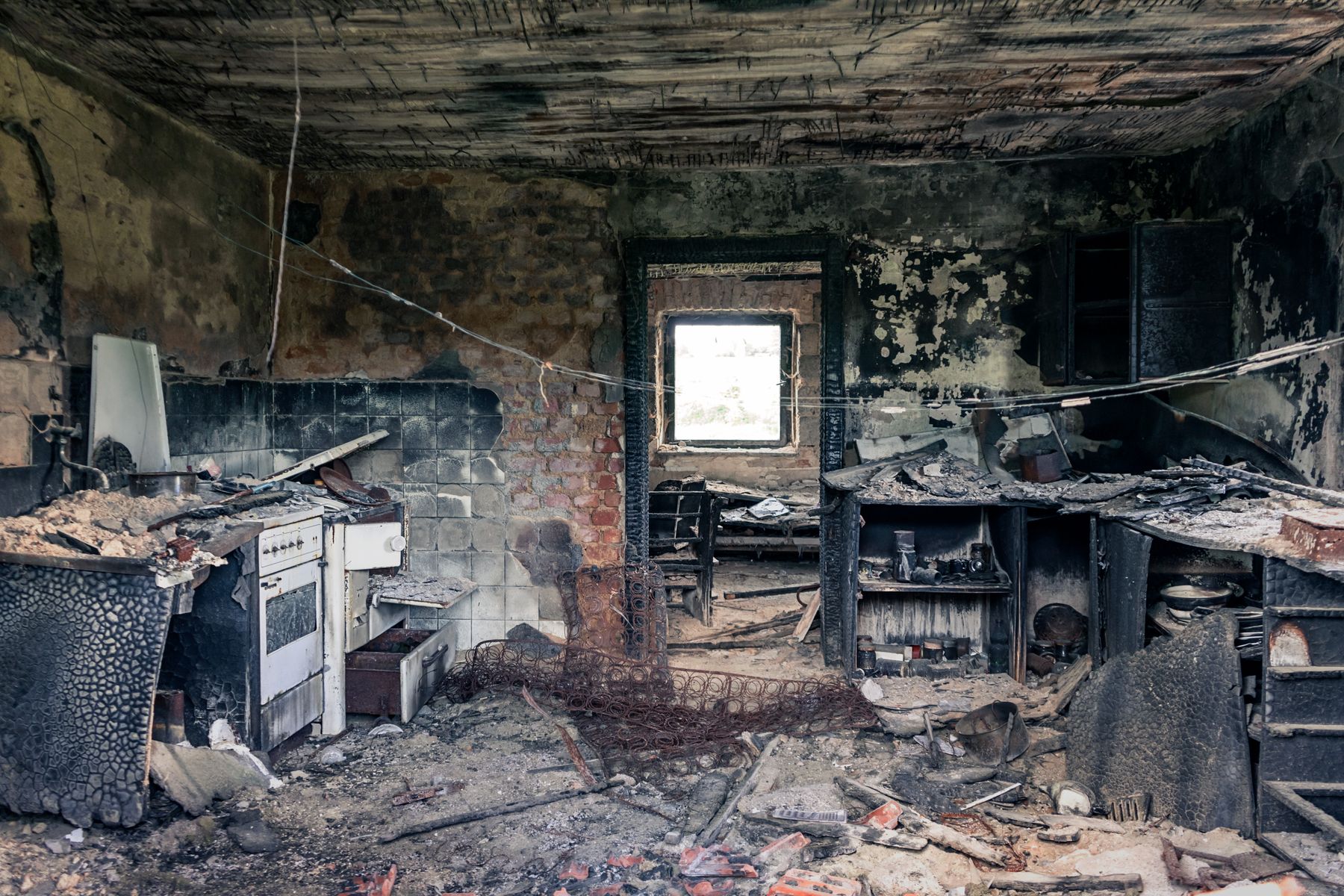
Smoke damage cleanup removes soot and smoke residue from walls, ceilings, HVAC systems and belongings, scrubs the air with HEPA filtration and neutralizes odor with treatments such as thermal fogging or hydroxyl generators. In Littleton it’s needed after house and kitchen fires, furnace puff-backs and regional wildfire smoke. Paint or air fresheners alone don’t remove smoke odor.
Smoke spreads through the whole house, follows air currents into cooler rooms, and gets pulled into the HVAC system and wall cavities. Even a small kitchen fire can leave a film of residue on walls, ceilings, cabinets and belongings in rooms far from the stove, along with a smell that lingers for months if it isn’t treated properly.
Smoke damage cleanup removes residue from surfaces and contents, cleans the air, and neutralizes odor where it has settled. Air fresheners and paint alone don’t work, because odor trapped in porous materials comes back on warm or humid days.
In Littleton, smoke cleanup is needed after house and garage fires, kitchen fires (including protein fires from burned food, which leave an almost invisible but strong-smelling residue), furnace puff-backs, and wildfire smoke drifting into homes from the foothills.
Smoke Damage Cleanup at a glance
- Availability
- 24/7, including nights, weekends & holidays
- Service area
- Littleton, CO: 80120, 80121, 80122, 80123, 80125, 80126, 80127, 80128, 80129, 80130, 80160, 80165, 80166
- Residue types
- Dry, wet, protein and puff-back soot
- Odor treatments
- Thermal fogging, hydroxyl, ozone (unoccupied spaces only)
- Often missed
- HVAC ducts, insulation, closets and fabrics
- Wildfire smoke
- Can affect homes far from the fire itself
Types of Smoke Damage
The type of fire determines the residue, and the residue determines how it’s cleaned.
Dry Smoke Residue
Fast, hot fires burning paper and wood leave powdery residue that’s easier to remove but gets into cracks.
Wet Smoke Residue
Slow, smoldering fires burning plastics and rubber leave sticky, smeary residue with a strong odor.
Protein Residue
Kitchen fires from burned food leave a yellowish film that discolors paint and has a very persistent odor.
Furnace Puff-Backs
A malfunctioning oil or gas appliance can spray soot through the ductwork into every room at once.
Wildfire Smoke
Fine particles from regional fires enter through vents and gaps, leaving residue and odor in the home.
HVAC Contamination
Ducts and air handlers can keep spreading smoke residue and odor long after the fire is out.
Signs of Smoke Damage
- A lingering smoky odor, stronger on warm days
- Gray or black film on walls and ceilings
- Yellowed paint, grout or plastics
- Dark streaks around outlets and vents
- Soot webs in ceiling corners
- Discolored metal fixtures and appliances
- Smell coming from closets, drawers and fabrics
- Odor when the furnace or AC turns on
Smoke odor that comes back after cleaning usually means residue remains in porous materials, ductwork or wall cavities that surface cleaning didn’t reach.
Smoke in the House?
After a small fire or smoke event, a few steps help limit lasting damage:
- Ventilate with windows open if outdoor air is clean
- Change the HVAC filter and keep the system off until it’s checked
- Don’t wipe soot from walls or fabrics
- Keep smoke-affected clothing bagged until it’s cleaned
How Does Smoke Damage Cleanup Work?
Smoke Damage Cleanup in Littleton follows four steps:
Assess the Residue
Technicians identify smoke and soot types and test cleaning methods on each surface before starting.
Clean Surfaces & Contents
Walls, ceilings, cabinets and belongings are cleaned with methods matched to the residue, such as dry sponging, wet cleaning or specialty products.
Clean the Air
HEPA air scrubbers capture airborne particles, and HVAC cleaning is coordinated if ducts are contaminated.
Neutralize Odor
Thermal fogging, hydroxyl generators or ozone (in unoccupied spaces) break down odor, and sealing primers lock in what’s left.
What Does Smoke Damage Cleanup Include?
- Soot & residue removal
- Wall, ceiling & cabinet cleaning
- Contents cleaning & deodorizing
- HEPA air scrubbing
- Thermal fogging
- Hydroxyl & ozone treatments
- Odor-sealing primers
- HVAC cleaning coordination
Odor removal works best in stages: remove the source, clean the residue, treat the air and structure, then seal anything that can’t be fully cleaned. Skipping straight to paint or fragrance usually means the odor returns.
Wildfire Smoke Along the Front Range
Summer and fall wildfires in Colorado and neighboring states can send smoke across the Denver metro area for days at a time. Homes along open space in Littleton’s western and southern neighborhoods, including Ken Caryl, Roxborough and Highlands Ranch, often take the heaviest exposure.
If your home smells like smoke after a smoke event, start by replacing HVAC filters and cleaning hard surfaces. If the odor persists, or residue shows up on surfaces and in ducts, a professional cleaning and deodorization treatment can remove what’s left.
Smoke Damage Cleanup by Littleton Area & ZIP Code
Smoke Damage Cleanup is available in every Littleton ZIP code. Here’s what to know in each part of the service area:
| Area | ZIP codes | What to know locally |
|---|---|---|
| Downtown Littleton | 80120, 80160, 80165, 80166 | Smoke from a fire in one downtown building can travel into neighboring storefronts and apartments through shared walls and ceilings. |
| Centennial & Southglenn | 80121, 80122 | Smoke from kitchen fires spreads through open floor plans and into HVAC ducts that serve the whole home. |
| Bow Mar & Columbine Valley | 80123 | Large open floor plans and high ceilings let smoke spread widely, so cleaning covers far more surface area than the fire itself. |
| Roxborough & Sterling Ranch | 80125 | Proximity to wildland means regional wildfire smoke can leave residue and odor in homes even without a nearby fire. |
| Ken Caryl & Dakota Ridge | 80127 | Wildfire smoke drifting from the foothills can leave residue and odor in Ken Caryl homes through vents and gaps. |
| Columbine & Chatfield | 80128 | Smoke from house fires and regional wildfires can settle into carpet, ducts and fabrics throughout the home. |
| Highlands Ranch | 80126, 80129, 80130 | Regional wildfire smoke and kitchen fires leave residue and odor that spread through the HVAC systems of larger two-story homes. |